
Cedarmark Advances, a small-business funding service in Anderson, IN, helps child care centers and daycares find equipment financing for classroom furniture and playgrounds, working capital for payroll, and term loans for expansions. This page explains a center's cash cycle, how to get a business loan for a daycare, what partners review and Madison County, IN child care counts.
| Employer centers (NAICS 624410) | 25 (CBP 2023) |
|---|---|
| Paid employees | 133 (CBP 2023) |
| No-payroll providers | 174 (NES 2024) |
| Centers in ZIP 46016 | 5 (ZBP 2023) |
How a Child Care Center's Money Moves
Tuition may be paid weekly or monthly, sometimes in advance, which can give a center predictable revenue when enrollment is full. Some families pay through third-party programs or employer benefits that reimburse on their own schedules. Payroll can be a large share of costs, and it does not shrink when a classroom is half full.
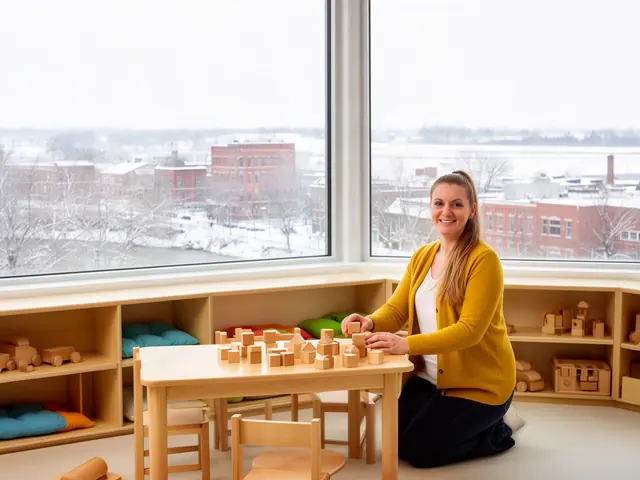
Capital costs come in waves: cribs, cots, tables, chairs, cubbies and learning materials for each classroom; outdoor play equipment and surfacing; a van for transport; and renovations to add or reconfigure rooms. Enrollment is the lever that pays for all of it.
Child Care in Madison County, IN
Madison County, IN had 25 child day care employer establishments in 2023, employing 133 people with $4.1 million in annual payroll (U.S. Census Bureau, County Business Patterns 2023). 60.0% had fewer than five employees.
In a separate program, 174 child day care businesses with no paid employees reported receipts in 2024 (U.S. Census Bureau, Nonemployer Statistics 2024); that count is not compared with the employer count. Those are mostly individual providers and are counted in a separate program and year. ZIP 46016, inside Anderson, IN, held 5 employer centers (U.S. Census Bureau, ZIP Code Business Patterns 2023).
Childcare Business Loans by Need
| Need | Fit to compare |
|---|---|
| Classroom furniture, cribs, playground | Equipment financing |
| A van or bus | Equipment financing |
| Payroll while enrollment builds in a new room | Working capital |
| Adding classrooms or a second center | Term loan |
Furniture and classroom equipment are covered in detail in financing daycare furniture and classroom equipment.
How to Get a Business Loan for a Daycare
Small business loans for daycare centers are reviewed on enrollment and collections. Partners want to see tuition deposits in the bank statements, current enrollment against capacity, the waiting list if there is one, and how the center is licensed. For an expansion, they want the cost of the new rooms and a realistic timeline for filling them, because new classrooms add staff costs from the first day.
How to get funding for a daycare center that is not yet open is a different question: Cedarmark does not arrange startup loans, and partners generally need an operating history.
Daycare Furniture Financing
Furniture and equipment for a classroom are lower-cost items individually but add up quickly across rooms. Partners finance them as an equipment package, often from a single supplier's quote. Because used children's furniture has limited resale value, some partners treat these packages as partly unsecured and look harder at the center's cash flow. Commercial playground equipment and safety surfacing can be financed together with installation.
Records Partners Tend to Request for Centers
- Bank statements showing tuition deposits
- Enrollment by classroom and the center's capacity
- Licensing details, if the partner asks
- Supplier quotes for furniture, playground or vehicle purchases
- The lease or property arrangement
Illustrative Example: Converting Storage Into a Toddler Room
Illustration with invented figures, not an offer. A center converts a storage room into a toddler classroom. Furniture, cots, cubbies and materials cost $14,000; the conversion itself costs $26,000. The owner finances the furniture over three years and the conversion with a five-year term loan, for combined payments of about $970 a month. Two added teachers cost far more than the payments, so the question is how quickly the room fills: at $260 a week per child, ten enrolled toddlers bring in about $11,270 a month.
County figures are on the Anderson, Indiana page; every business type is on the industries hub.
Planning an Expansion Around Enrollment
New classrooms add teachers from the first day, but tuition arrives only as children enroll. Centers that expand smoothly tend to plan in this order: confirm the space and approvals, line up the furniture and equipment quote, estimate how many weeks it will take to fill the room from the waiting list, and size the financing to cover staffing until it does. A term loan for the buildout, equipment financing for the furniture and a little working capital for the first months is one combination.
For a room-by-room equipment budget, see financing daycare furniture and classroom equipment.